Maa Ka Doodh: The Documentary That Shows India the Reality Behind Dairy
India sees milk ae as chai. Prasad. Paneer. Dahi. Ghee. Childhood. Strength. Tradition. Motherhood.
We see it as violence.
That is exactly why Maa Ka Doodh matters.
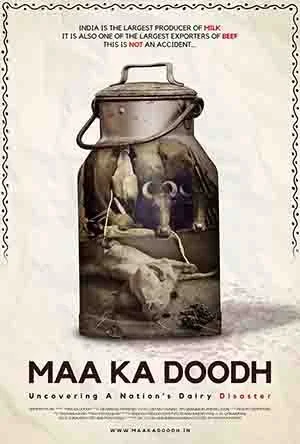
Dr. Harsha Atmakuri’s investigative documentary does something rare: it asks India to look beyond the stainless-steel milk vessel, beyond the sweet shop, beyond the emotional language of purity, and into the lives of the mothers and babies whose bodies make the dairy system possible.
Maa Ka Doodh: Uncovering A Nation’s Dairy Disaster is an investigative feature-length documentary about the untold stories behind India’s White Revolution and the ethical, cultural, environmental, religious, economic, social and political complexities created by dairy consumption in India.
For a country that often sees vegetarianism as compassion, this film asks a deeper question: if milk comes from motherhood, what happens to the mother and her child?
What Is Maa Ka Doodh About?
Maa Ka Doodh follows Dr. Harsha Atmakuri on a journey across India to understand the system behind dairy. The film’s official website says he travelled more than 20,000 kilometres by road over two years and conducted nearly 100 interviews with people connected directly or indirectly to dairy, including public figures, activists, dairy farmers, gaushala administrators, cow-protection workers and others.
Dr. Harsha Atmakuri is the documentary’s director, writer and producer.
The film is not merely about what happens in one farm, one city, one gaushala or one market. It is about a national belief system. It shows how India’s love for milk sits beside a reality that most consumers are never invited to see.
And that reality begins with a mother.
The Truth India Avoids: Milk Comes After Birth
A cow or buffalo does not produce milk because humans love chai. She produces milk after pregnancy and birth, for her baby.
This is not an activist slogan; this is basic lactation biology. Veterinary sources describe milk yield in dairy cows as connected to lactation stage, with milk rising after calving and then declining over time.
That one fact changes the entire conversation.
When someone says, “Cows need to be milked,” they usually start the story halfway. The fuller story is that the dairy system depends on repeated pregnancy, birth, milk extraction and control over the mother-child bond. The pain of a full udder in an already-lactating mother does not prove that humans are doing her a favour. It proves that humans created a dependency and then called managing that dependency “care.”
Maa Ka Doodh asks India to stop confusing extraction with compassion.
Why This Film Is Uncomfortable for India
India has built a powerful emotional mythology around dairy. Milk is linked with festivals, temples, childhood nutrition, family care and ideas of purity.
But a society cannot claim ahimsa while refusing to ask what happens to mothers and babies in a system built on milk extraction.
That is why Maa Ka Doodh feels uncomfortable. It does not attack Indian culture. It asks Indian culture to live up to its own highest values.
If motherhood is sacred, then motherhood cannot be sacred only when the mother is human.
If a baby’s bond with their mother matters, then that bond cannot stop mattering when the baby is a calf.
If ahimsa is a value, then it must reach the plate, the glass, the cup of tea and the sweets we offer with love.
The Dairy-Flesh Export Connection
One of the most important questions raised by Maa Ka Doodh is the relationship between dairy and the trade in animal bodies.
The film’s official site says it explores how India became one of the largest exporters of beef in the world and identifies a direct link to the nation’s dairy industry.
This claim needs to be understood carefully. It does not mean every glass of milk can be reduced to one export statistic. It means the dairy economy cannot be separated from the economic fate of cows, buffaloes, bulls and calves whose bodies are treated as useful or useless depending on profit.
India’s dairy scale is enormous. NDDB data says India produced 239.3 million tonnes of milk in 2023–24. APEDA data also shows that India exported 1,254,775.31 MT of buffalo flesh products in 2024–25.
These numbers belong in the same conversation.
A dairy system produces more than milk. It produces unwanted male calves. It produces exhausted mothers. It produces animals who are valued when they are profitable and discarded when they are not.
Maa Ka Doodh forces us to confront this uncomfortable continuity.
Why Vegetarianism Is Not Enough
Many Indians grow up believing that vegetarianism is non-violence.
But dairy is not separate from the body of a mother. It is not separate from pregnancy. It is not separate from separation. It is not separate from the future of calves, bulls, cows and buffaloes once they are no longer profitable.
Vegetarianism may reject the direct eating of animal flesh, but it still funds the exploitation of other animals when it includes milk, curd, paneer, ghee, butter, cheese and sweets made from dairy.
This is the moral gap that Maa Ka Doodh exposes.
The question is not whether dairy looks violent on the plate. The question is whether dairy can exist without controlling the reproductive life of another mother.
A Documentary That Turns Watching Into Responsibility
The official Maa Ka Doodh website states that the film has been placed in the public domain by its creators and is free for anyone to watch, download, use, share or screen in colleges, universities, societies and events without permission.
That matters because this film is not meant to sit quietly on a streaming platform. It is meant to move through homes, campuses, housing societies, community halls, WhatsApp groups and family conversations.
Watch it with people who still say, “But milk is harmless.”
Watch it with someone who believes dairy is automatically ethical because India respects cows.
Watch it with someone who has never thought about the buffalo mother whose milk becomes tea, sweets or packaged dairy.
Then ask one simple question: if we know this, what should we do next?
The Next Step: Become Vegan
Awareness is important, but awareness alone does not free anyone.
After watching Maa Ka Doodh, the next step is not guilt. The next step is alignment.
Animal Save India’s free Plant-Based Starter Kit is designed to make that next step practical for Indian households. The page describes the kit as a resource with nutritional information, weekly meal plans and recipes curated around Indian diets, food habits, taste preferences and regional culture.
This matters because many people agree with the ethics of veganism but feel stuck at the level of daily food.
“What will I put in chai?”
“What about protein?”
“What about calcium?”
“What will my family eat?”
“What can I cook that is Indian, affordable and familiar?”
The Starter Kit helps answer those questions with practical guidance. It brings the conversation home: from documentary to kitchen, from shock to change, from agreement to action.
You do not need dairy to drink chai. You do not need paneer to eat well. You do not need ghee to honour tradition. Indian food already has dal, chana, rajma, sprouts, millets, rice, roti, sabzi, coconut, peanuts, sesame, soy, cashews and countless regional plant-based possibilities.
The real change is not giving up culture. It is removing exploitation from culture.
Final Thought
Maa Ka Doodh is difficult to watch because it challenges something India has normalised for generations.
But discomfort is not the enemy. Denial is.
If milk comes from motherhood, then dairy is not just a food issue. It is an animal rights issue. It is a question of whether we respect mothers only when they belong to our species.
Watch Maa Ka Doodh. Share it. Screen it. Start the conversation in your family, college, workplace or community.
Then take the ethical next step.
Download Animal Save India’s free Plant-Based Starter Kit. Stop funding animal exploitation. Become vegan.